
How long does chocolate last? Shelf life of bars, pralines and gift sets when you buy gifts early
Many people buy chocolate gifts as early as November, so they are ready and waiting under the tree. That raises a practical question: how long does chocolate last? In this guide we explain what the date on the pack means, why bars, pralines and chocolate-coated nuts differ in their chocolate shelf life, and how to store chocolate so that buying early does not turn into stress.
How long does chocolate last? The date on the pack is what counts
On food in the European Union you will come across two different types of date. They are not synonyms, and this is often where confusion arises around chocolate past its best-before date.
The date of minimum durability (“best before”)
The date of minimum durability is, under Regulation (EU) No 1169/2011, the date until which the food retains its specific properties when properly stored. Until that day, then, the manufacturer guarantees quality – taste, aroma and texture – provided you follow the storage conditions given on the pack. The European Food Safety Authority (EFSA) explains that this marking concerns quality: after the date the manufacturer no longer guarantees the original properties, and the food may lose flavour, texture or freshness.
The use-by date (“use by”)
“Use by”, or the use-by date, is something else. It is used on foods that are, from a microbiological point of view, highly perishable. After this date has passed, the food is deemed to be unsafe under the same EU regulation. The Czech Agriculture and Food Inspection Authority (SZPI) states that such products must not be offered for sale after the date.
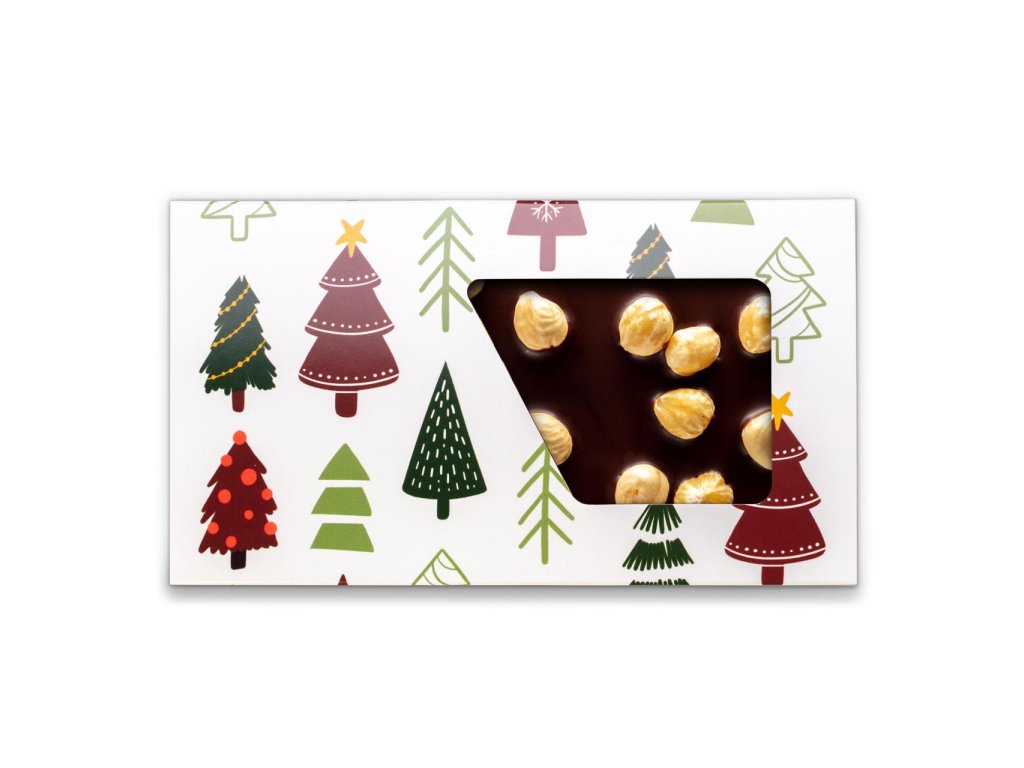
Chocolate is usually marked with a best-before date – SZPI lists it among examples of foods labelled this way. What always counts, however, is the wording and the date on the actual pack, not a general estimate. On the page for the Christmas Tree with hazelnuts bar, for example, it says: “Best before the date shown on the packaging.”
Chocolate shelf life: why dark, milk and white age differently
Even among plain bars, not every chocolate ages at the same speed. You cannot, though, read a specific time limit off the type of chocolate by eye – the manufacturer always sets it, and you will find it on the pack. What differs is rather the reason why dark chocolate is often dated for longer than milk or white chocolate.
Dark chocolate contains little or no milk and more cocoa solids. According to food-science sources, substances from the cocoa solids slow down the fat going rancid, which is why dark chocolate usually keeps its quality for longer.
Milk chocolate contains milk fat. According to food-science sources, that oxidises faster than cocoa butter, which is why milk chocolate bars usually keep their quality for a shorter time.
White chocolate is a mix of cocoa butter, sugar and milk – without cocoa solids. It is more sensitive to light and air, and usually loses its original flavour first.
If you are choosing a gift early and want a more relaxed option, reach for a plain bar and always check the date. You will find an overview in the chocolate bars, dark, milk and white chocolate categories.
The shelf life of pralines and chocolate with nuts: what to watch for
The shelf life of pralines is usually shorter than that of a plain bar, because of the filling. Cream, fruit paste or a nut paste bring more moisture and other fats, which can change sooner than the chocolate shell itself. With nuts, the main concern is the oils turning rancid, and also the fact that nuts readily pick up smells from their surroundings.
That is why, in the pralines category, Chocolenka recommends enjoying them immediately after opening; according to the shop, the recommended consumption period is up to three months from the production date. Here too, though, the main rule applies: follow the date and the conditions on the box in front of you.
The same applies to chocolate with whole nuts or to nuts coated in chocolate, for example hazelnuts in dark chocolate. These are currently marked “In production”; you will find the current status on the product page. Nuts are allergens – you will always find the ingredients and allergen information on the product page and on the pack.

Expired chocolate: what happens after the best-before date
Once the best-before date has passed, the manufacturer no longer guarantees the original taste and appearance. The chocolate may be drier, less aromatic, or a white coating may appear on the surface. That is usually linked to swings in temperature or to moisture, not automatically to the chocolate having gone bad.
With expired chocolate, it is therefore important to distinguish the type of date. If the product is marked “use by”, after that date it is deemed to be unsafe under EU rules. With a best-before date, EFSA says the issue is quality, and appearance and smell can also be used to judge the product after the date – but only if it was stored correctly and the packaging is intact. If the chocolate smells unpleasant, the nuts taste rancid, or you have any doubts, it is better not to eat it. Expired chocolate is therefore not automatically something to throw away, but neither is it automatically something to eat – what counts is the type of date, the storage and the condition of the piece in front of you.
How to store chocolate so it keeps until Christmas
For the date on the pack to hold as intended, how you keep the chocolate also matters. The basic rule for how to store chocolate until the holidays is simple: in a dry place, in the dark, away from strong smells and usually at 18–23 °C. The exact advice differs by product, so follow the instructions on the pack as well. Radiator heat, a parked car and the fridge are all bad for it: heat can melt it, moisture and temperature swings encourage a white coating, and both nuts and chocolate readily pick up foreign smells.
After you buy a bar, a set or an Advent calendar, put it in a cupboard in a cooler room and leave it in its packaging until you give it or until the first window.

Tips for buying chocolate gifts early
If you want Christmas ready in advance, a few simple rules will help:
Read the date on the pack. It is the only binding figure for the specific product. Check it on sets and bars before you put the gift away.
Consider the type of chocolate. A plain bar usually has a longer shelf life than filled pralines or products with nuts. Both suit the Christmas Eve table; just do not leave pralines open longer than you need to.
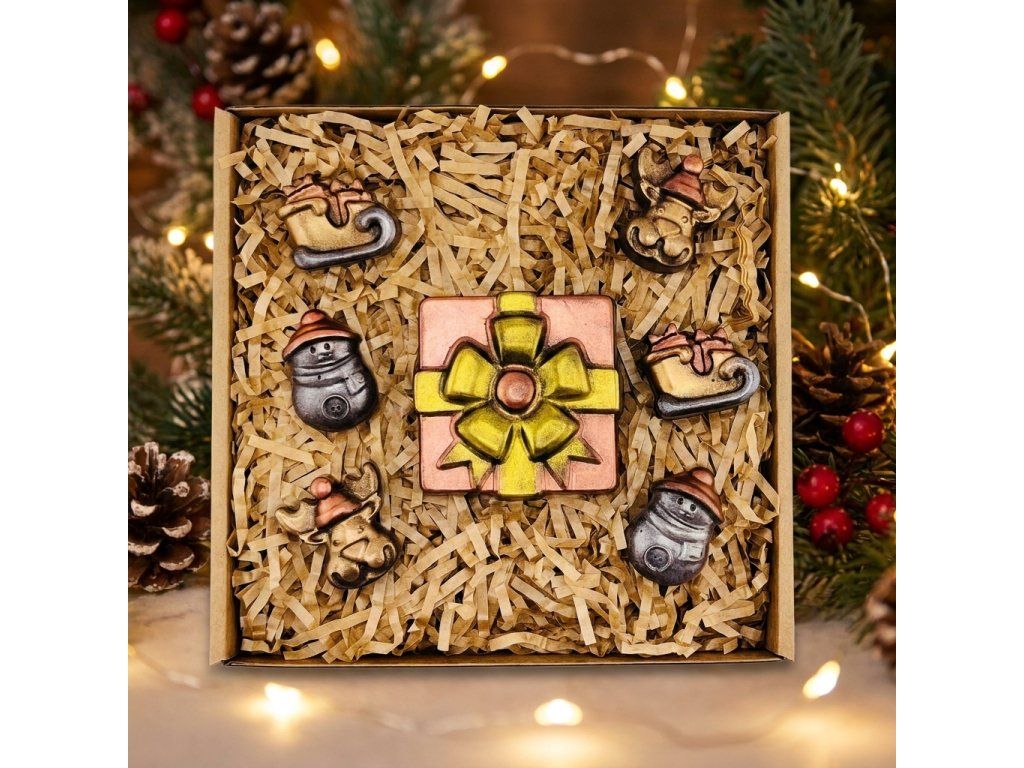
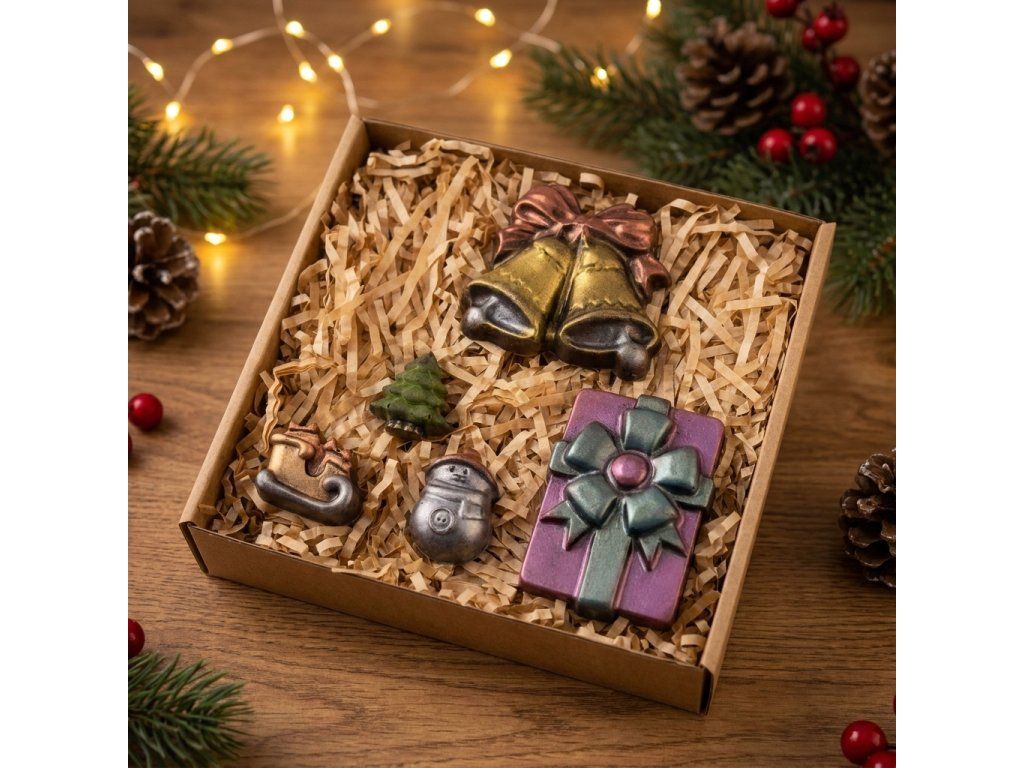
Store festive sets with care. Leave the Chocolate set – Christmas Present (gold) and Christmas Surprise No. 1 in a dry, dark place until you hand them over.
Treat an Advent calendar like a bar. The first window opens on 1 December; until then, store it as carefully as any other chocolate. You will find a selection in the Advent calendars category.

Conclusion: how long chocolate lasts under the tree
The answer to how long chocolate lasts is not a single number for every bar. It starts with the type of date on the pack, continues with the kind of chocolate and the filling, and ends with how you store it until Christmas. If you are buying gifts early, it is enough to read the best-before date, choose a suitable type – from a plain bar to pralines – and store the chocolate in a dry place, in the dark, away from smells and usually at 18–23 °C. Then your early purchase can wait calmly until it goes under the tree. And if you do mix up the type of date on the pack, come back to a simple rule: “use by” is about safety, “best before” is about quality – and what always counts is the product in your hand.
Choose a chocolate gift calmly and early: a chocolate bar, a box of pralines, a Christmas Present set or an Advent calendar from Chocolenka. You will find the ingredients and storage conditions with each product.